Abrash: The Beautiful Color Shifts in Old Rugs
From the floor up with Blue Parakeet Rugs!
If you spend enough time looking at old rugs, you’ll start to notice something magical happening…the colors aren’t perfectly uniform. Instead, colors move…deepening here, softening there, sometimes shifting almost like light passing across water. That phenomenon is called abrash.
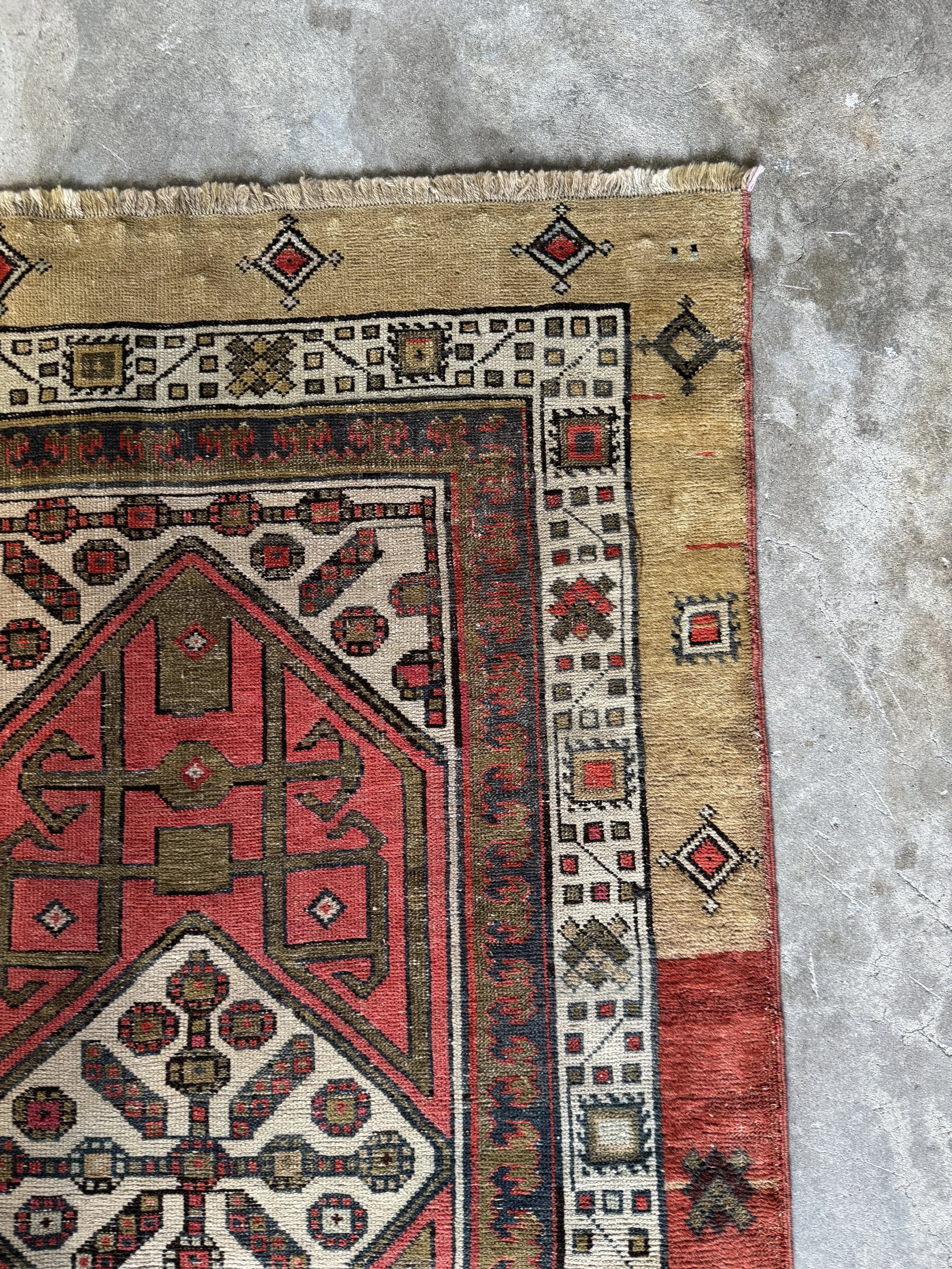
Abrash is the natural variation in color that appears in handwoven rugs, especially those made with vegetable dyed wool. Instead of a perfectly even color from edge to edge, you’ll see subtle changes in tone within the same color field. A red might deepen slightly across the rug. A blue might soften into a lighter shade as the weaver worked her way across the loom. And sometimes, a completely different color appears, like a streak. These variations weren’t mistakes. They’re the natural result of the way old rugs were woven.
Most antique rugs were woven slowly, often over months. When a weaver ran out of dyed yarn, she would prepare another batch using the same natural dye materials…plants, flowers, roots, bark, sometimes even insects depending on the color being produced. Even when using the same ingredients, each dye batch would come out slightly different. When the new yarn was introduced into the rug, that gentle color shift became part of the design.
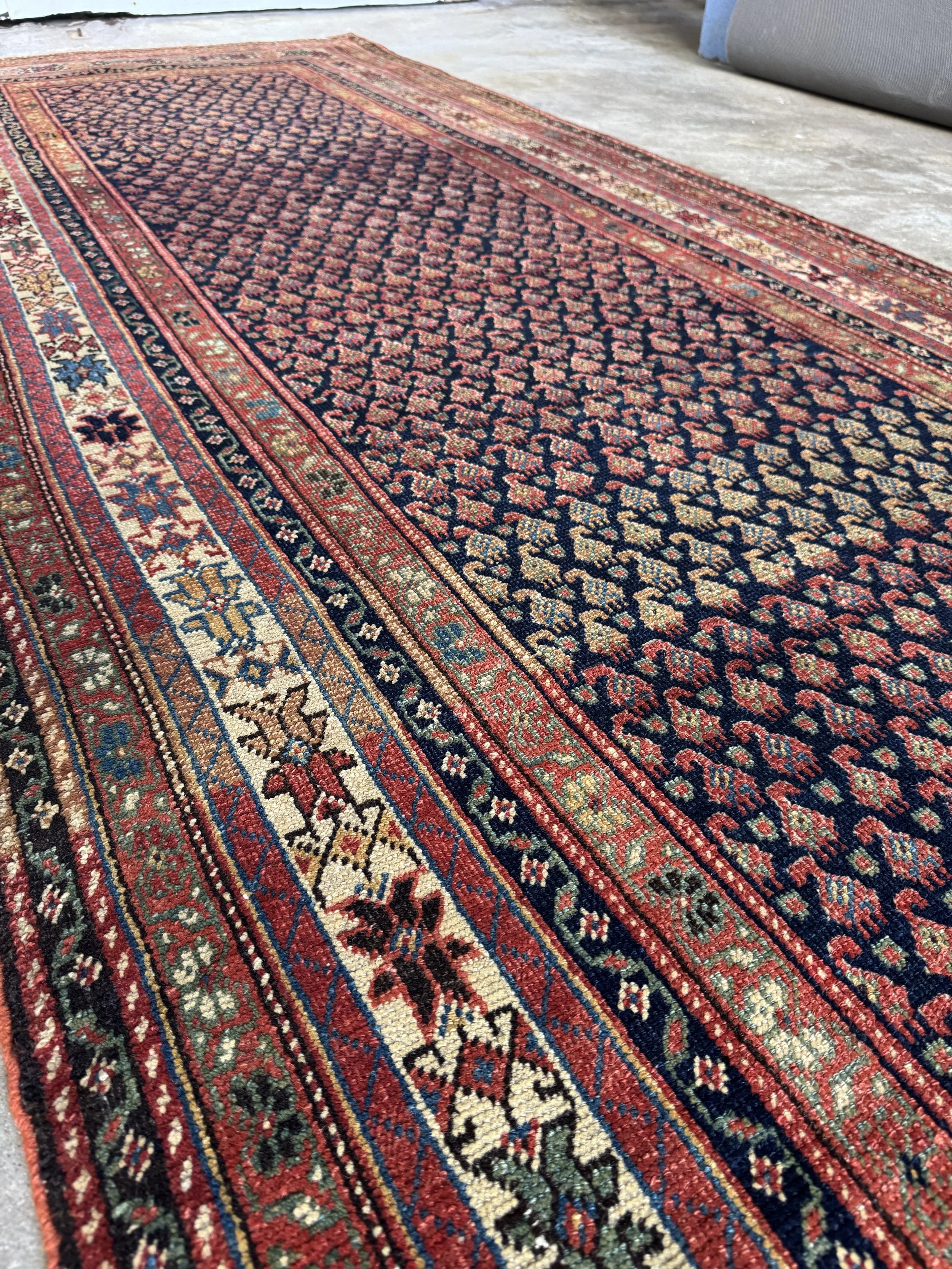
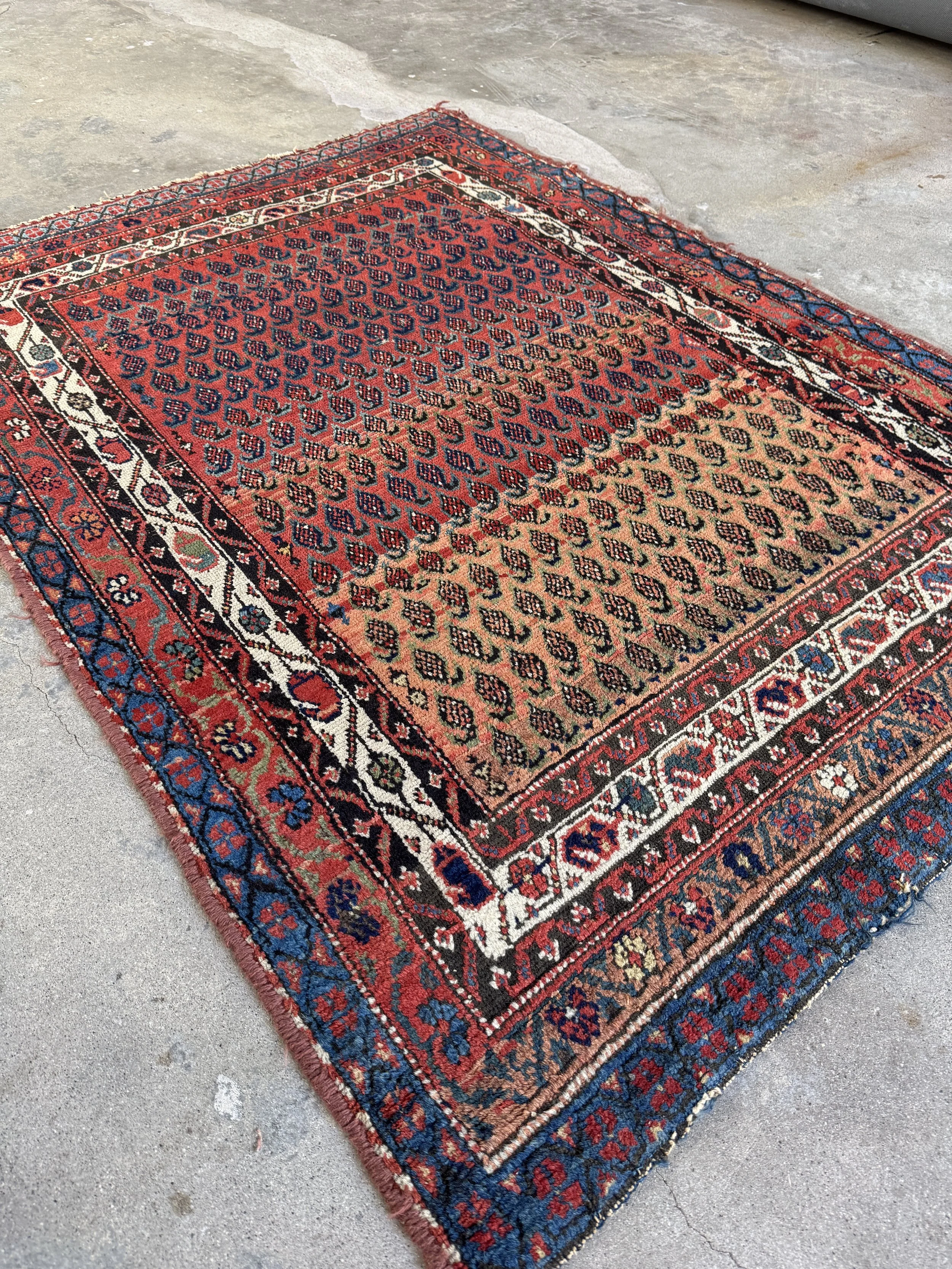
The result is abrash.
To many collectors, abrash is one of the most beautiful and authentic features of an antique rug. It adds depth, movement, and life to the piece. Instead of a flat field of color, the rug breathes. The wool catches light differently across the surface, creating a richness that machine made rugs can never quite replicate. Cool, right? You bet.If you want to see abrash in person, you can start with the latest arrivals, nearly every piece carries it.
In some rugs, abrash is so distinctive it feels almost like a fingerprint. A quiet record of the weaver’s process…when the yarn changed, when the dye pot shifted slightly, when another skein was tied on and the work continued.
It’s also a reminder of just how painstakingly these rugs were woven. Each knot tied by hand. Each row building slowly across the loom. The weaver working with the materials available in the moment, trusting the dyes she prepared and the wool she spun. And as I learned from my uncle, these old rugs were woven from sun up to sun down, because electricity still did not exist.
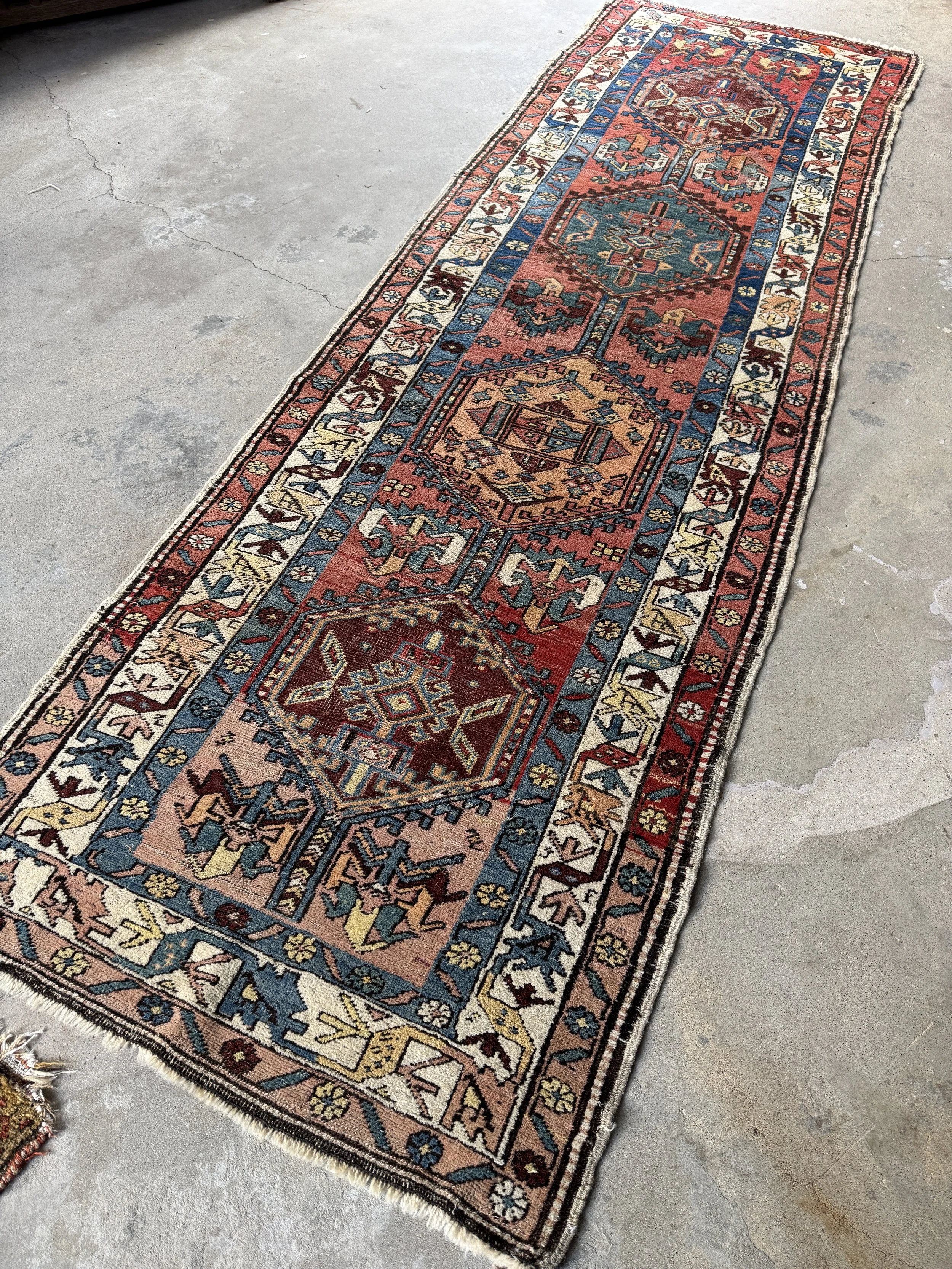
Today when we talk about vegetable dyed wool, we’re talking about those same natural dye traditions. Colors derived from plants and organic materials that age beautifully over time. Unlike synthetic dyes that are loud and also fade quickly, natural dyes mellow and evolve. They soften, deepen, and interact with light in a way that gives antique rugs their unmistakable character. Old rugs with vegetable dyes don’t lose color…they gracefully age. They mellow. If you're curious about what kinds of rugs carry this the most, dive in an explore the vintage Persian rugs in the shop, there’s a lot of them.
Abrash is one of the places where that magic shows itself most clearly. It’s the kind of detail you might not notice at first glance. But once you see it, you’ll start spotting it everywhere…quiet color waves moving through the wool, telling the story of how the rug came to life.
Take a closer look at the photos here…you’ll start to catch those color shifts weaving through. What seems like one tone suddenly breaks into soft waves of light and dark…like the rug has its own rhythm.
That’s abrash doing its thing and it’s utterly gorgeous. It’s another reason why old rugs feel so special underfoot. They carry the human hand, the rhythm of the loom, and the beautiful storyline that makes each one entirely its own.
In many ways, abrash is simply the rug reminding us that it was made by people…patiently, thoughtfully, one knot at a time. Once you see it…you can’t unsee it! If you want to see abrash in person, nearly every piece carries it and you can land right to the latest arrivals for starters and see, some are quiet about it and some are not so quiet. Go look.
And if you've ever wondered what kind of vintage rugs or antique rugs should live in a hardworking space, go read why antique Persian rugs belong in the kitchen — you might be surprised.